

Hashtags are still one of the strongest discovery signals on Instagram, but most people either overuse them, copy them blindly, or rely on outdated advice. That is where Instagram hashtag generators come in. Used correctly, they save time and help you discover relevant hashtags. Used incorrectly, they do absolutely nothing.
This guide explains what an Instagram hashtag generator is, how it works, when it helps, when it does not, and how to use one properly as part of a broader Instagram growth strategy.
What Is an Instagram Hashtag Generator?
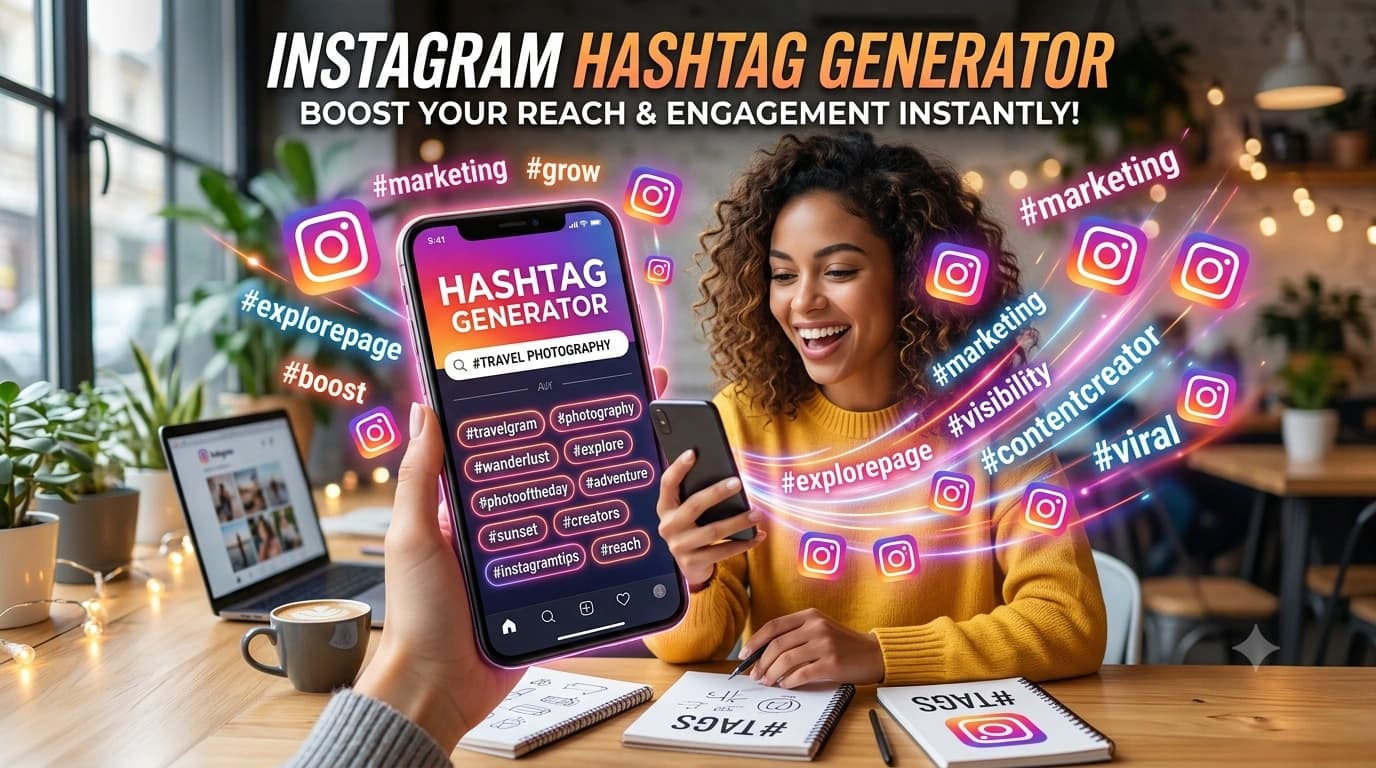
An Instagram hashtag generator is a tool that suggests hashtags based on a keyword, topic, or piece of content. The goal is to help creators find hashtags that are relevant, searchable, and aligned with what they are posting.
Most hashtag generators work by:
- Analyzing keyword relevance
- Pulling related hashtag variations
- Grouping hashtags by popularity or size
- Filtering spam or banned hashtags
Some generators are simple. Others claim to use AI or engagement data. Regardless of how advanced they sound, the usefulness depends on how you use the output.
Why Hashtags Still Matter on Instagram
Instagram has evolved into a discovery-first platform. Content is surfaced through:
- Search
- Explore
- Reels feed
- Hashtag pages
- Suggested posts
Hashtags help Instagram understand what your post is about and who it should be shown to.
According to Instagram’s own guidance on search and discovery, keywords and hashtags help categorize content and surface it to users searching for specific topics.
Hashtags are not magic. They do not override poor content. But they do help content reach the right audience when used correctly.
How Instagram Hashtags Work Behind the Scenes
Hashtags act as contextual labels. When you add hashtags to a post, Instagram uses them to:
- Categorize your content
- Associate it with similar posts
- Test distribution to relevant audiences
Instagram does not show your post to everyone following a hashtag. It selectively surfaces posts based on relevance, engagement signals, and account history.
This is why random or overly broad hashtags rarely work.
What an Instagram Hashtag Generator Actually Does
A hashtag generator does not know your audience, your content quality, or your posting history. It does one job only: surface potential hashtags based on a keyword.
A good Instagram hashtag generator helps you:
- Discover relevant hashtag variations
- Avoid repeating the same hashtags every time
- Find long-tail hashtags with lower competition
- Save time during content creation
It does not guarantee reach. It supports strategy.
Types of Instagram Hashtag Generators
Not all hashtag generators work the same way.
Keyword-Based Generators
These suggest hashtags based on a seed keyword.
Example:
Input: “fitness”
Output: #fitnesslife, #fitnessmotivation, #fitgoals
These are common and easy to use but often surface very competitive hashtags.
Niche-Based Generators
These focus on narrower hashtag clusters.
Example:
Input: “home workout”
Output: #homeworkouttips, #apartmentworkout, #bodyweighttraining
These tend to perform better for smaller or newer accounts.
AI Instagram Hashtag Generators
These analyze captions or images to generate hashtags automatically.
They are useful for speed, but results still need manual review.
AI does not understand nuance, trends, or audience intent the way humans do.
Free vs Paid Instagram Hashtag Generators
Free Instagram Hashtag Generators
Free tools are ideal for:
- Small creators
- Side projects
- Businesses just starting on Instagram
Limitations usually include:
- Fewer suggestions
- No engagement data
- No saved hashtag sets
That said, free hashtag generators are more than enough when used properly.
Paid Hashtag Tools
Paid tools may include:
- Hashtag performance data
- Engagement estimates
- Historical tracking
- Competitor analysis
These are useful for teams managing multiple accounts or running campaigns at scale.
What Makes a Good Instagram Hashtag?
A good hashtag is not about popularity. It is about relevance and intent.
A strong hashtag:
- Matches the content of the post
- Aligns with what users are actually searching
- Is not overloaded with spam
- Fits your account size and niche
Using only high-volume hashtags often means your post disappears within seconds.
Understanding Hashtag Sizes
Hashtags generally fall into three size categories.
Large Hashtags
Over 1 million posts
Examples:
#love
#instagood
These offer massive reach but extremely short visibility.
Medium Hashtags
100,000 to 1 million posts
Examples:
#contentmarketing
#smallbusinesslife
These balance reach and relevance.
Small or Niche Hashtags
Under 100,000 posts
Examples:
#remotemarketingjobs
#handmadebranding
These often perform best for consistent engagement.
A good hashtag set includes a mix of all three.
How Many Hashtags Should You Use?
Instagram allows up to 30 hashtags, but using all 30 is not required.
Most creators see consistent results using:
- 5 to 15 highly relevant hashtags
Instagram has stated that relevance matters more than volume.
More hashtags do not equal more reach.
Where Should You Place Hashtags?
There are two common approaches:
- In the caption
- In the first comment
Both work. Instagram treats them the same.
Choose based on readability and workflow, not myths.
Common Hashtag Mistakes
These mistakes hurt reach more than people realize.
- Using banned or restricted hashtags
- Copy-pasting the same hashtag block on every post
- Using hashtags unrelated to content
- Chasing trending hashtags with no relevance
- Ignoring niche hashtags
A hashtag generator helps avoid some of these, but strategy still matters.
How to Use an Instagram Hashtag Generator Properly
Step-by-step approach:
- Start with a clear keyword related to your post
- Generate a list of suggested hashtags
- Remove overly broad or spammy hashtags
- Mix large, medium, and small hashtags
- Customize hashtags for each post
- Track what works over time
A generator is a starting point, not the final answer.
Instagram Hashtag Generator for Different Use Cases
For Small Businesses
Focus on:
- Location-based hashtags
- Service-specific hashtags
- Community hashtags
Avoid generic tags like #business or #marketing.
For Creators and Influencers
Focus on:
- Content-type hashtags
- Audience-interest hashtags
- Niche identity hashtags
Consistency matters more than volume.
For Reels
Reels rely more on engagement and watch time, but hashtags still help with initial categorization.
Use:
- Topic-specific hashtags
- Content format hashtags
- Avoid irrelevant trending tags
Are Instagram Hashtag Generators Safe?
Most are safe, but low-quality tools may:
- Suggest banned hashtags
- Repeat spam-heavy tags
- Encourage keyword stuffing
Always review hashtags manually before posting.
Do Hashtags Still Work in 2025 and Beyond?
Yes, but they work differently.
Instagram search now prioritizes:
- Keywords in captions
- Account relevance
- Engagement patterns
Hashtags support discovery, but they no longer carry posts on their own.
Hashtags are part of Instagram SEO, not a shortcut.